3 December 2025
In keeping with the Benedictine tradition of ongoing formation, the community of Collegio Sant’Anselmo observes a day of reflection at the beginning of the liturgical seasons of Advent and Lent. The day is a crucial part of the residents’ spiritual discipline, spent in silence and prayer, with music offered during the midday meal. This year, on Sunday 30 November, we were pleased to receive a returning member of the Sant’Anselmo family, Father Lorenzo Sena OSB.
Fr. Lorenzo is a monk of the Silvestrine Benedictine Congregation from the Monastery of Saint Sylvester in Monte Fano, Fabriano. An alumnus of Sant’Anselmo, he is well-known for his extensive study and dissemination of Benedictine spirituality. He is the author of Appunti sulla Regola di San Benedetto, a commentary on monastic and oblate formation, which explores themes such as fraternal life, lectio divina, and the spiritual dimension of work. Furthermore, Fr. Lorenzo has contributed to historical research on the Silvestrine tradition, notably with his study Storia e tradizione agiografica nella “Vita Silvestri”, dedicated to the Order’s founder, Saint Sylvester Guzzolini. As a speaker for retreats, biblical weeks, and conferences for monastics and laity, Fr. Lorenzo is recognised for his ability to integrate Benedictine tradition with the spiritual needs of our time.
The theme of the day was the Liturgy of Advent, explored across two conferences. Fr. Lorenzo first focused on the liturgical year’s opening antiphon, In illa die (“In that day”), using the question “When?”—a recurring plea in the Psalms—as a framework for discussing the faith and hope that undergird the Advent season. He stressed that Advent celebrates the Lord’s manifold comings: the historical Incarnation, the final return at the end of time, and the continuous actualis coming of Christ in the present. Countering the popular reduction of Advent to merely a preparation for Christmas, Fr. Lorenzo highlighted the essential eschatological dimension. For monastics in particular, he argued, this should be a forceful point of passionate anticipation for the ultimate encounter with the Lord, encapsulated by the Scriptural close: “Come, Lord Jesus!” The rich monastic tradition, especially its “devotion to heaven” and concept of compunctio — humility born from the awareness of human misery and the need for God — cultivates this orientation, seeing the monk as an inhabitant of the Heavenly Jerusalem.
In the second conference, Fr. Lorenzo further explored this eschatological desire through the lens of Saint Gregory the Great, particularly his Moralia in Job, and his emphasis on the infinite distance between Creator and creature. Due to the darkness of our fallen nature, the complete vision of God’s essence is impossible in this life; it awaits the passage through death. However, drawing on Gregory’s image of the vestigia Dei (the “footprints of God”), he maintained that when we are “touched by the breath of the Spirit,” love for our spiritual homeland offers us “glimpses of contemplation”—brief, rare, but powerful “anticipations” of the Divine. These moments, like Moses seeing only God’s “back” in Exodus, dilate the heart and grant the strength to face the challenges of daily life, helping us to pursue God by following the ‘footprints of his love.’ Fr. Lorenzo concluded by recalling the famous vision of Saint Benedict, where “for a soul seeing the Creator, the whole creation is well nigh small,” affirming that the monastic task in every generation is to continually rediscover and propose this profound doctrine of the desire for God.
The community of Collegio Sant’Anselmo extends its warmest appreciation to Fr. Lorenzo Sena for his diligent preparation and the erudite conferences, which were deeply resonant with the Benedictine ethos. We were also grateful to have him preside over the conventual Mass. It was a particular joy to welcome back an alumnus of the Collegio to share his wisdom with the next generation of monks, reinforcing our commitment to monastic formation as we begin this new liturgical year.
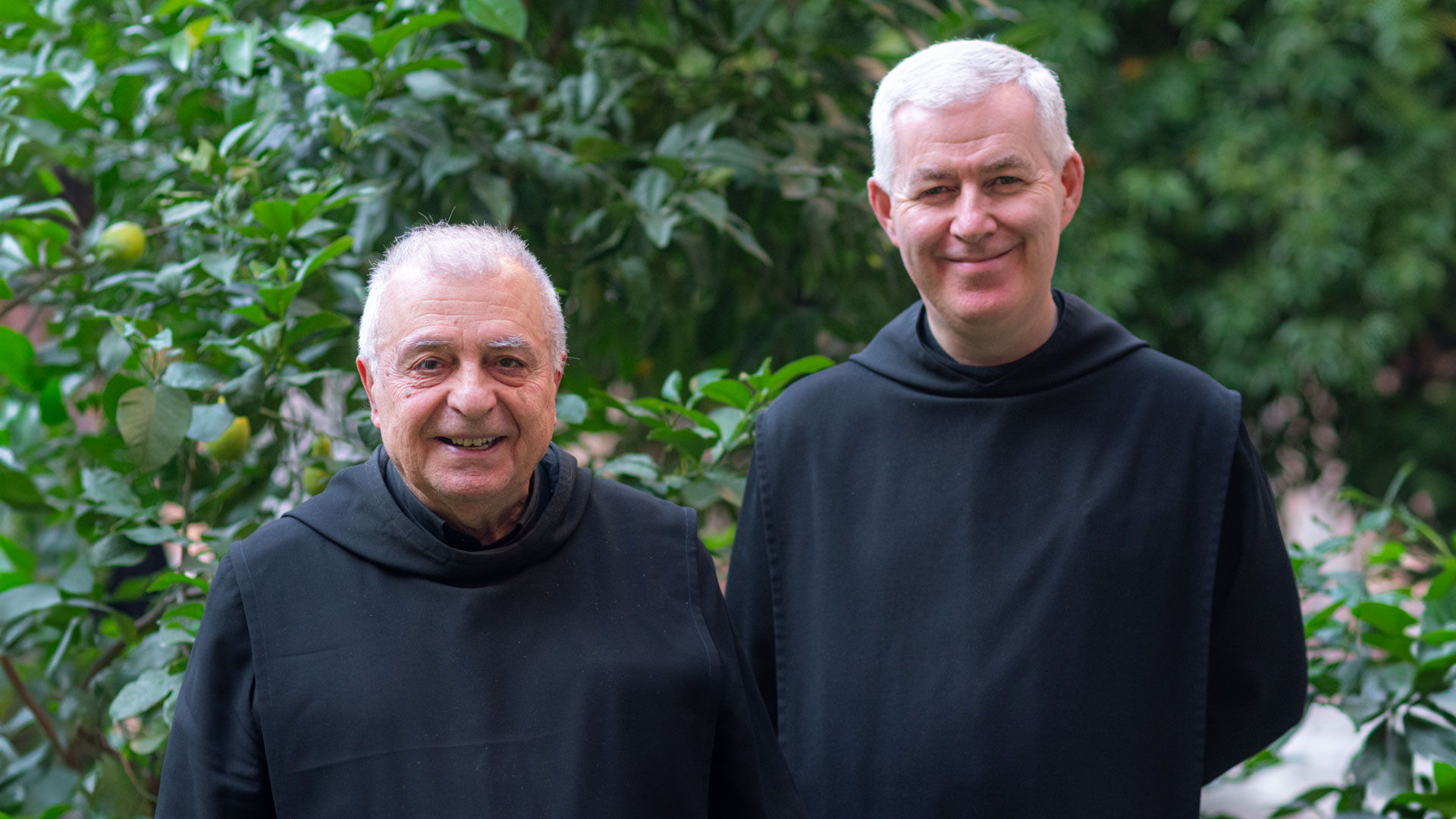
From left: Fr. Lorenzo Sena and Prior Fr. Brendan Coffey
3 December 2025
In keeping with the Benedictine tradition of ongoing formation, the community of Collegio Sant’Anselmo observes a day of reflection at the beginning of the liturgical seasons of Advent and Lent. The day is a crucial part of the residents’ spiritual discipline, spent in silence and prayer, with music offered during the midday meal. This year, on Sunday 30 November, we were pleased to receive a returning member of the Sant’Anselmo family, Father Lorenzo Sena OSB.
Fr. Lorenzo is a monk of the Silvestrine Benedictine Congregation from the Monastery of Saint Sylvester in Monte Fano, Fabriano. An alumnus of Sant’Anselmo, he is well-known for his extensive study and dissemination of Benedictine spirituality. He is the author of Appunti sulla Regola di San Benedetto, a commentary on monastic and oblate formation, which explores themes such as fraternal life, lectio divina, and the spiritual dimension of work. Furthermore, Fr. Lorenzo has contributed to historical research on the Silvestrine tradition, notably with his study Storia e tradizione agiografica nella “Vita Silvestri”, dedicated to the Order’s founder, Saint Sylvester Guzzolini. As a speaker for retreats, biblical weeks, and conferences for monastics and laity, Fr. Lorenzo is recognised for his ability to integrate Benedictine tradition with the spiritual needs of our time.
The theme of the day was the Liturgy of Advent, explored across two conferences. Fr. Lorenzo first focused on the liturgical year’s opening antiphon, In illa die (“In that day”), using the question “When?”—a recurring plea in the Psalms—as a framework for discussing the faith and hope that undergird the Advent season. He stressed that Advent celebrates the Lord’s manifold comings: the historical Incarnation, the final return at the end of time, and the continuous actualis coming of Christ in the present. Countering the popular reduction of Advent to merely a preparation for Christmas, Fr. Lorenzo highlighted the essential eschatological dimension. For monastics in particular, he argued, this should be a forceful point of passionate anticipation for the ultimate encounter with the Lord, encapsulated by the Scriptural close: “Come, Lord Jesus!” The rich monastic tradition, especially its “devotion to heaven” and concept of compunctio — humility born from the awareness of human misery and the need for God — cultivates this orientation, seeing the monk as an inhabitant of the Heavenly Jerusalem.
In the second conference, Fr. Lorenzo further explored this eschatological desire through the lens of Saint Gregory the Great, particularly his Moralia in Job, and his emphasis on the infinite distance between Creator and creature. Due to the darkness of our fallen nature, the complete vision of God’s essence is impossible in this life; it awaits the passage through death. However, drawing on Gregory’s image of the vestigia Dei (the “footprints of God”), he maintained that when we are “touched by the breath of the Spirit,” love for our spiritual homeland offers us “glimpses of contemplation”—brief, rare, but powerful “anticipations” of the Divine. These moments, like Moses seeing only God’s “back” in Exodus, dilate the heart and grant the strength to face the challenges of daily life, helping us to pursue God by following the ‘footprints of his love.’ Fr. Lorenzo concluded by recalling the famous vision of Saint Benedict, where “for a soul seeing the Creator, the whole creation is well nigh small,” affirming that the monastic task in every generation is to continually rediscover and propose this profound doctrine of the desire for God.
The community of Collegio Sant’Anselmo extends its warmest appreciation to Fr. Lorenzo Sena for his diligent preparation and the erudite conferences, which were deeply resonant with the Benedictine ethos. We were also grateful to have him preside over the conventual Mass. It was a particular joy to welcome back an alumnus of the Collegio to share his wisdom with the next generation of monks, reinforcing our commitment to monastic formation as we begin this new liturgical year.
Altre Notizie
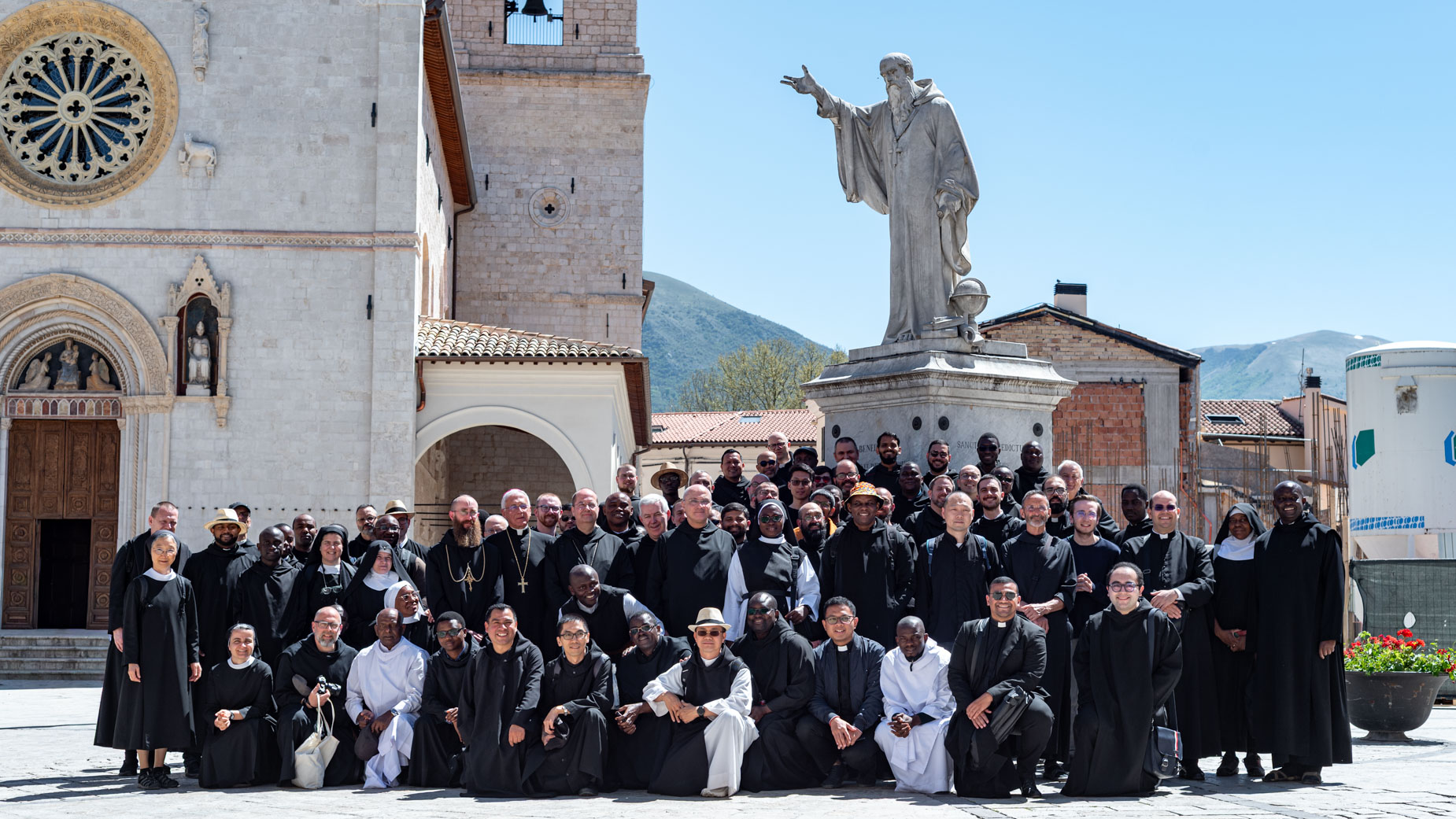
A delegation from Sant’Anselmo visited the restored Basilica of Saint Benedict and the Abbey of Saint Benedict on the Mountain in Norcia to mark the opening of the celebratory year of Norcia.
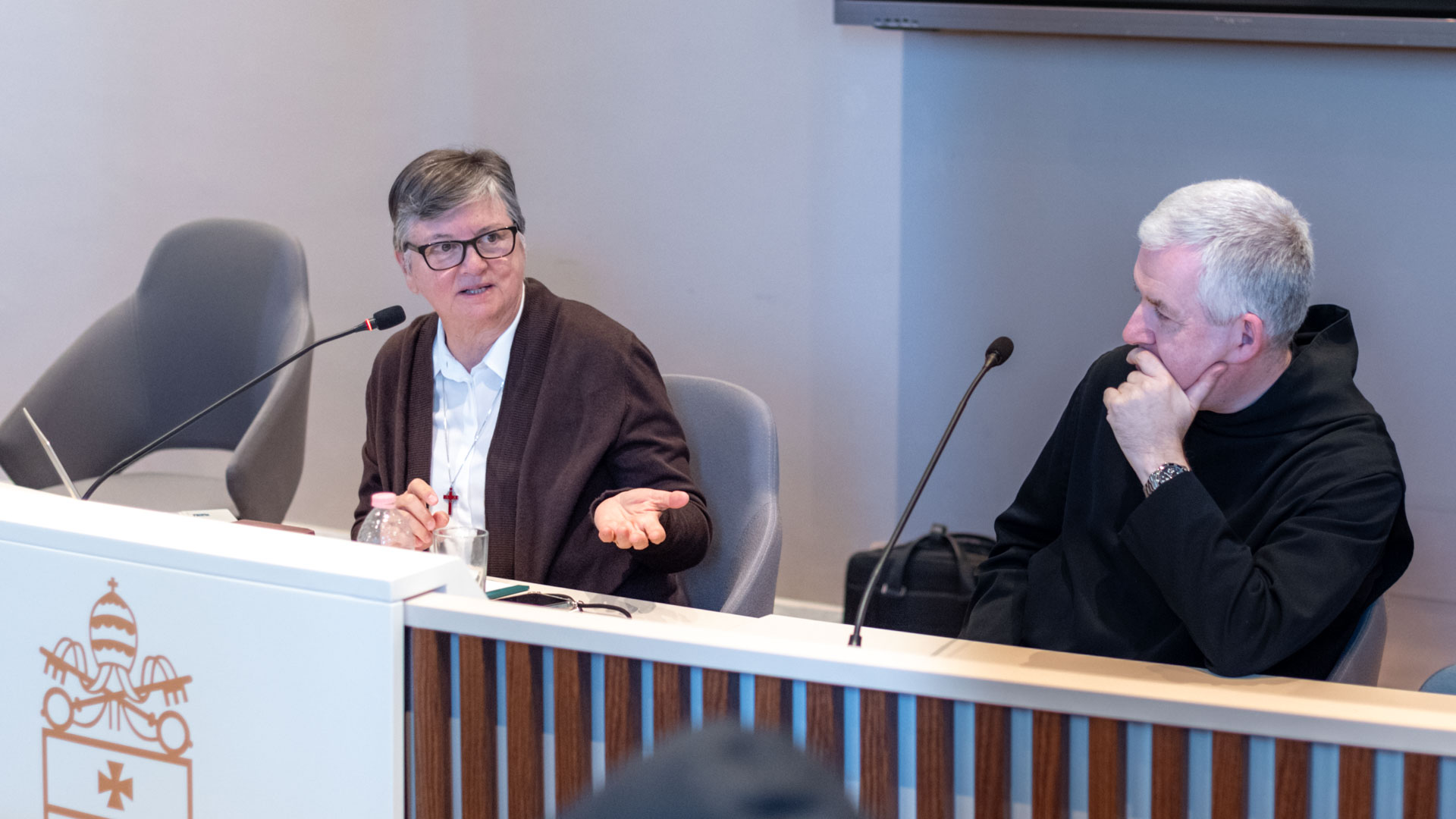
Collegio Sant’Anselmo convened its residents for a Day of Formation examining the theological, canonical and institutional dimensions of spiritual abuse in the Church.
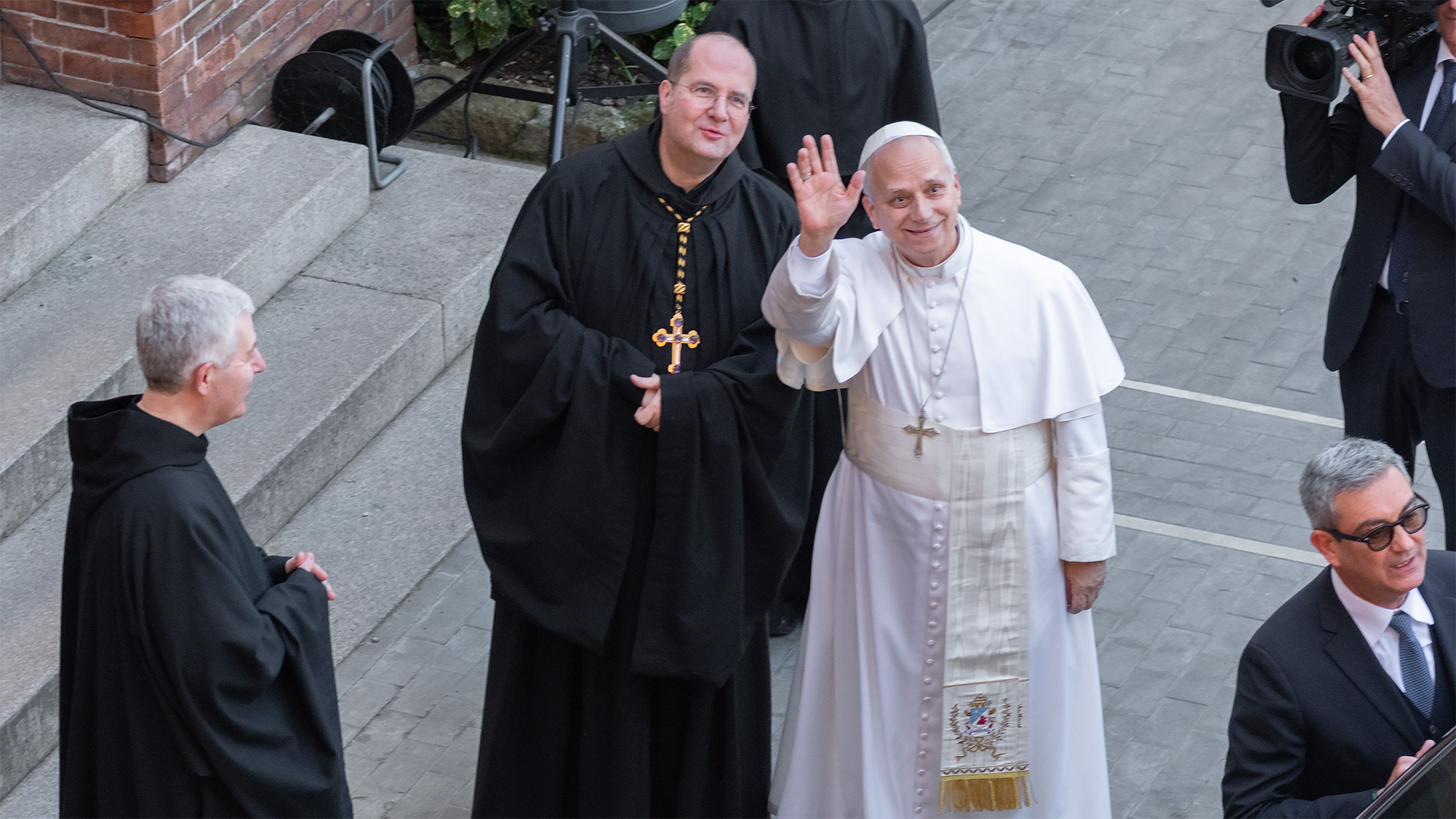
Meeting at the Basilica of Sant’Anselmo with the Benedictine and Dominican communities, Pope Leo XIV began the Lenten Stational Church pilgrimage, moving in penitential procession to the Basilica of Santa Sabina.